

I wanted to tweet the most egregious parts of Julie Bindel’s new book Feminism for Women (2021), but there were too many to list, and my responses too expansive, so I compiled them into a blog post to peruse.
Overall, the main take away I had from Feminism for Women is confusion. The list of chapters feels nominal as her argument lacks coherence or structure; her opinions randomly pop up as the book goes on (and on and on). Reading it I can actually feel Bindel creaking into her chair, cracking her fingers, and tapping away self-congratulatorily about whatever she’s mad about that day.
Thematically, stylistically, argumentatively, it reads confused and ill thought out and, I know this is a really weird thing to say, but there are just so many opinions in this book. They flow constantly and disjointedly. It’s not journalism or even a primer on feminism; it’s a collection of bitterness at why everyone else is wrong, loosely strung together and presented in no real order other than what seems like the order she thought of it. There’s also a significant and concerning lack of actual research. There are almost no references, citations or evidence and she talks a lot about “cool girls” and “academics” but never says who they are, and never cites her claims about what they said.
Truthfully, this can’t be a book review because I don’t really think of it as a book. I’ve copy + pasted the most egregious (Fallacious? Illogical? Weak?) arguments along with my response below it. Feminism for Women is a manuscript of Julie’s outrage, whose arguments have been dug out of the 1970s, shredded and taped back together. For ease of reading – since her book doesn’t allow it – I’ve grouped the quotes under possible themes rather than their order of print.
Forward we go.
Which feminism is feminist enough?
“In 2018 I was invited to an American university to debate… The man I was debating with had spoken out about how he believed abortion should be criminalised and rape decriminalised, with an exemption for stranger attacks by masked marauders. Astonishingly, the pickets on campus focused on me, not him… on the opposite side of the campus to where I was speaking, one of the teaching rooms was turned into a therapy hub. There were trained counsellors on site, the room was littered with soft toys, and there were even a couple of dogs and cats brought along for non-judgemental cuddling” (p.50).
Actually, it was focused on both of them: Julie Bindel and Milo Yiannopolous. From the university’s own website, it wasn’t a therapy hub, or a cuddle room, simply an alternative space as both Milo and Julie have views which many people find deeply upsetting, and the university wanted students to know that the opinions espoused by the speakers were not endorsed by the university.
“I was told by someone who had popped in to observe that the walls were strewn with ‘affirmative statements’ such as ‘trans women are women’ and ‘non-binary identities are valid’”(p.50)
What is Bindel’s point here? That trans women are not women? That non-binary identities are invalid?
“Feminists that critique such [radical feminist] ideologies and practices are accused of being practising ‘white feminists’ whatever our race and ethnicity. To argue that the sex trade is bad for women, surrogacy is exploitation, and women do not enjoy being strangled during sex until they pass out often earns us the labels of ‘prude’ and ‘regressive’.” (p.80)
Can Bindel show her readers one example as to when a feminist using the critical term “white feminist” has ever referred to her as a prude or as regressive? Either she’s mixed up two separate groups of people or she’s making it up.
“Nimco Ali is a black feminist, a survivor of FGM and a refugee from Somalia to the UK. She says she is tired of hearing white women claim that feminism is dominated by white middle-class women because it assumes that feminism only exists in the West.” (p.88)
No, it assumes that in the West, Western feminists dominate feminists from elsewhere in the world. Very often Julie Bindel claims to speak for the Global South, and this is a prime example.
“Even though [Caitlyn] Jenner is a former Trump supporter. And neither could Kellie Maloney, formerly a boxing promoter called Frank who once admitted on live television that he would procure prostituted women for his male friends in the boxing world to abuse, and who is a former member of UKIP. There we have it: the point clearly spelled out to us by natal men. Former pimps and racists who were men but now identify as women are exempt from the accusation of being white feminists (p.86).
Bindel is able to generate outrage through constructing all transwomen as racists, pimps, and otherwise dangerous in response to clearly isolated incidents and individuals. The effect of this is to repackage trans equality itself as invasion and threat. Plenty more instances of this throughout the book.
“Women who choose to be anti-feminists do so because they have vested interests, whether it’s because of their career, their marriage, or generally seeking approval from men. They worry that by taking a more principled feminist stand their life will be that bit more difficult for them and men might not find them quite so attractive and delightful.”
Or maybe they just don’t give a shit, which is allowed. Why is it open season on being unnecessarily cutting to women Bindel looks down on?
“[anti-feminists] say things like ‘women want to be choked; women like pornography; women want to sell sex; women want to wear the veil’.” (p.93)
Women are allowed to do these things and none of these things negates a woman’s politics. They are allowed to enjoy doing them and, what’s more, WOMEN ARE ALLOWED TO CONSENT TO THINGS WHICH ARE DANGEROUS, HARMFUL OR SOMETHING YOU DON’T PERSONALLY LIKE.
Our desires are socially and culturally shaped, that’s true, whether our desires are wanting to be choked during sex, wanting to be cuddled during sex, or not wanting sex at all. And yes, all of us ought to be more self-aware and reflect on our desires and ask what shapes them, what made them, and what makes space for them, but there would still be women who liked pornography, wearing the veil and being choked. Even after the revolution.
“Feminism should pose a serious challenge to patriarchy, and if it doesn’t then it is not real feminism.” (p.94).
I agree. Bear with me a moment: Women being poor, being broken and starved by austerity, having their welfare slashed and being unfairly burdened by care-giving responsibilities are all products of patriarchy, and selling sex allows women to step away from this. Don’t talk to me about alternatives to selling sex unless you have the money to back that up. Selling sex is a shitty job, but it’s a lot less shitty than living below the breadline because a bunch of suits decided that your life fiscally wasn’t worth keeping alive. Selling sex, and advocating for one’s right to do it safely, is a threat to the patriarchy because it allows women access to one of the few jobs that merits them earning money instantly, in high volume, to fit round caregiving responsibilities and with no paperwork, forms, qualifications or licence. Selling sex poses a challenge to the patriarchy, and while selling sex might not be Bindel’s version of feminist (and honestly, it isn’t mine) advocating for the right to be safe when doing it absolutely is because it isn’t what the patriarchy wants.
“Choice feminists prioritise the individual” (p.97)
She says this as if it’s a bad thing. I know we’re all supposed to hate individualism, but Lisa Downing argues, and I agree, that after generations of being literal actual property of men, maybe we as women can make choices that meet our individual needs for a while and that’s OK? Prioritising our needs can exist concomitantly with making room and addressing the needs of others – it is not and should not be a zero sum game.
“But feminists were not and are not attacking other women for what they choose.” [it sounds like that’s exactly what Bindel does – see above] “Rather we are asking, ‘What are the forces that shape choices?’ and in doing so, we are considering what the rewards and punishments are for the ‘choices’ women make, and naming the potential impacts on girls and young women when they see women embracing ‘choices’ that effectively disempower them.” (p.95)
If that is so, look at the reasons why women are vulnerable to being exploited in the sex industry, or why they might see selling sex as the best of a bunch of bad options. Why might women find women only pole dancing classes as exercise more appealing than say, joining a gym full of posers and bros? (No judgement, I love lifting weights, but men in gyms can hassle women with everything from unsolicited advice to unwanted touching). Notwithstanding this: Women. Are. Allowed. To. Make. ‘Bad’. Choices.
“But whilst Rowling is besmirched and dismissed as ‘transphobic’ despite having never expressed an anti-trans sentiment”
Well… I think there is at least some evidence that the woman who pretends to be a man to sell books has doubled down on her hateful views about trans people. There are so many, too many to list here, but here’s a primer.
“The mantra that ‘men can be feminists’ is depressingly common” (p.108)
Maybe men are only ever as feminist as they need to be – and that’s depressing – but as the patriarchy and gender norms affect everyone, men need to be feminist. We can all be feminists.
“However, feminists do listen to trans people. Many of us share platforms and respectfully debate with trans activists. The problem is not feminists’ reluctance to listen, it is more that any proposed debate or discussion is often boycotted and picketed by trans activists who, in claiming their right to identify as they choose, say, ‘My right to exist is not up for debate.’ (p.109)
I have written elsewhere about why these debates are farcical, pointless and bordering on dangerous, so I won’t rehash my arguments. Suffice to say that a right to exist is not up for debate. Such debates are, to quote Shon Faye, “time-consuming, exhausting distractions from what we should really be focusing on: the material ways in which we are oppressed”
“Circumstances in which women would formerly have risen up and formed feminist groups are now an amalgamation of gender identity, queerness and virtue-signalling in primarily upper-middle-class settings.” (p.110)
Bindel loves telling the readers how she talks on university campuses, until such university students don’t want her, then she writes them off as ‘upper middle class’ as if
- She isn’t middle class herself,
- She is able to tell who is upper middle class by virtue of the fact they disagree with her.
- Queerness and gender identity are issues concerning only upper-middle-class people.
Carceral feminism in the firing line
“I have been called a carceral feminist on numerous occasions, despite the fact that I have spent more than three decades campaigning against unnecessary prison sentences, am a founder of a law reform organisation, and have led numerous campaigns to free abused women from life sentences for killing violent men.” (p.52)
First, Bindel’s comment is fatuous and tautological: no one argues for “unnecessary prison sentences”. The issue here is what is considered “necessary”.
Second, while I don’t love the phrase ‘carceral feminist’ and distance myself from using it, by calling for actions to be criminalised, Bindel is calling on the punitive power of the state: she is supporting carceral action in the name of feminism. Ergo, she is a carceral feminist.
(I also hate the way Bindel uses “abolitionist feminist” as I think only feminists who fight for abolitionism should use it and not people who simply want to abolish the sex industry, but to keep things easy, I’m going to mirror her language.)
“I doubt I, a seasoned feminist campaigner, [lest we forget]would report rape or sexual assault to the police in the current climate of police and CPS scepticism and relative inaction (p.52).
So why take such umbrage with feminists who call out police inadequacies?
“‘Carceral’ is commonly used to discredit those of us who wish to see men who pay for sex criminalised, and also as a critique of anyone who wants to keep criminal penalties on domestic violence… What the accusers [presumably anti-carceral feminists, though she doesn’t name her sources because why would she?] seem less concerned about is the fact that the vast majority of those incarcerated in women’s prisons have been victims of sexual and other forms of violence committed by men who have rarely been held to account”
I’m going to break my response to this confused comment down so I don’t miss anything out:
- I don’t think Bindel sees the basic contradiction in her position, nor does she see any reason to examine it if she does see it. She seems quite comfortable saying that she doesn’t want to use the police herself, but still finds it uneasy when others criticise her for insisting on police presence.
- By accusers, I’m assuming she means people who use the term ‘carceral feminist’, or prison abolitionists. Women imprisoned is a huge part of the critique of prisons, and abolishing prisons/CJS is with the aim of freeing everyone, including and especially, victims of harm and abuse.
- ‘Accusers’ wish to see an end to criminal penalties because there is no evidence that they are working, a fact that Bindel herself refers to in the book when she asks why so many women end up dead at the hands of men (p.27).
- Those who do not want to see men who pay for sex criminalised argue this because criminalising men does not make them safer. Criminalising buyers of sex does not eradicate the sex industry any more than criminalising drugs eradicates their use. Criminalising sex work makes sex workers less safe, especially because – as Bindel says – the police do not help women.
- Criminal penalties on domestic abuse should be critiqued because there is no evidence that they work. More law is not the answer.
But, as Pragna Patel, one of the founders of the feminist group Southall Black Sisters says: ‘Incarceration has to remain an option for those seeking accountability and protection in the absence of anything better.’ (p.52).
A lot of people say this, and I get it. Nothing can match police power in their ability to offer immediate safety to victims during and after dangerous incidents. But, what exactly are feminists like Bindel doing to ensure “anything better” comes along so we don’t have rely on prisons anymore? Pushing for more criminalisation is not advocating for “anything better”.
“These feminists [feminists like Bindel] support measures that will result in men being deterred from committing such violent acts in a culture in which there is impunity for men who target women and children.” (p.53).
Such as prison sentences? No evidence for that. Plenty of evidence however, that feminists like Bindel are playing a role in mass incarceration.
Porn
“Although proving a causal connection is difficult, there is plenty of evidence-based research that suggests that the more porn boys and men consume, the more likely they are to be sexually aggressive to women and girls” (p.32).
A total failure of logic, here. If a causal connection cannot be proved, then there is no evidence. If there is plenty of evidence, Bindel hasn’t cited any so her point is not proven. Saying there is plenty of evidence isn’t evidence. Citations needed!
As to whether porn is ruining the sex lives of the youth, that’s both debateable and almost impossible to prove. There is evidence that pornography has educational benefits related to sexual desires, emerging sexual identities and for developing new sexual techniques.
I’m not pro-porn or anti-porn, btw. I just think it’s possible, no necessary, to talk about porn without the default position being that it’s harmful.
“The immediate response to a critique of the ‘all sex is good sex’ narrative tends to be … that I am accusing women who proport to enjoy harmful sexual practices as suffering from ‘false consciousness’. But false consciousness exists.” (p.46)
So the accusations are correct, then?
“The same argument can apply to what is termed the ‘sex positivity’ movement. We have already seen that harmful sexual practices such as anal gang-banging and choking are reframed under the ‘choice’ banner as erotic and empowering.” (p.73).
I’ve both consumed and filmed hardcore sadomasochistic pornography and I know exactly how exploitative the industry can be. Don’t just take my word for it. Gruellingly long days, an aching body and a payment that, while useful, doesn’t always feel congruent with the work performed to earn it. Similar to any other job I’ve had. The point I’m making here isn’t that porn work is work like any other and so should be accepted, but that in many ways, porn work is unexceptional, and that’s because porn work — like all work — is exploitative and, even when decriminalised, often sucks (pun not intended).
Besides, anal gangbanging and choking are not inherently harmful; like everything else, consent, desire, choice and agency play a part.
“The cool girls tell us they like pornography, that they don’t mind starring in their own self-made film to send to their boyfriends, or watching pornography to please him, and that it can even be feminist.” (p.101)
Who are these ‘cool girls’ and why does Bindel sound so misogynistic in a book ostensibly about how to be a feminist?
“And as we have seen time and time again, to speak out against sex often leads to feminists being labelled as frigid” (p.101)
No evidence that anyone said this. Unless Bindel is standing in front of the mirror, she’s going to have to actually reference some of these claims otherwise people might think she’s making this up to bolster her own position.
Prostitution
“A cohort of pro-prostitution academics and harm minimisation service providers also attended [the Police Vice Conference of 2009], but they were presenting research that they argued showed that barely any women in the indoor sex trade in the UK had been trafficked or otherwise coerced into prostitution. Therefore, they were arguing that the men who pay for sex are merely one half of a business transaction and that the law should not interfere in that business. (p.54)
There is a huge amount of evidence to show that most indoor workers are not trafficked, and that migrant workers overall are underrepresented in research. See here, here and here. Which means that as consensual workers the law shouldn’t interfere with their work because the workers don’t want the law to.
“As a result of the judicial review, anyone who accrued a criminal record for street soliciting offences while below the age of eighteen would no longer have to disclose the criminal record when going for jobs or volunteer positions. It’s interesting that the sex-trade abolitionist feminists, so often accused of being ‘carceral’, rather than the pro-prostitution lobbyists, were the ones to succeed in effectively decriminalising large numbers of formerly prostituted women.” (p.54)
That isn’t what decriminalising means, but don’t let that get in the way of a smug storytelling.
[When interviewing male erotic dancers] “I interviewed a few of the dancers and their stories sounded remarkably similar to those told to me by female strippers. The men had all come from typical trafficking source countries such as Hungary, Thailand and Kenya.” (p.62).
I actually said “wow” out loud when I read this. I don’t even know where to begin. Actually, begin here, with Emily Kenway’s brilliant book.
“But every survivor I met at the conference told me that the supporters of the sex trade, such as those shouting ‘SWERF’ and ‘TERF’ outside, ignore the issues of race, indigenous status, class and misogyny when it comes to prostitution.” (p.76)
Bindel gives no example of what is meant by “ignoring issues of race….”. There is stacks of evidence that sex worker rights movements exist all over the world, including those who focus on indigenous status, race and class.
“I prepared to launch Prostitution Narratives: Stories of Survival in the Sex Trade, a collection of twenty first-person accounts by women who had left the sex trade. The stories recounted the violence, abuse and long-lasting effects of prostitution, such as post-traumatic stress disorder.” (p.76)
Left the sex trade. LEFT. So, presumably no longer dependent on it for an income, which means they have nothing to lose if the industry is closed down. Unlike people who are currently sex working who, strangely, were not at the launch.
[In response to Ken Roth, Executive Director of Human Rights Watch supporting Amnesty’s call for decriminalisation of sex work]’ “Sex-trade survivor, Rachel Moran, responded with: ‘Ken Roth wouldn’t you say, if a person cannot afford to feed themselves, the appropriate thing to put in their mouth is food, not your cock?’” (p.80)
I’d like to take this opportunity to remind both Bindel and Moran that it was sex workers setting up hardship funds for sex workers, NOT abolitionist feminists. If a person cannot afford to feed themself, wouldn’t the appropriate thing to give them be money, not platitudes?
Plus, Amnesty and Ken Roth base their position, not on the desire to fuck women, but to redress the human rights issue. These positions are based on evidence which Amnesty cited showing forced eviction, deportation, and the increasing abuse of sex workers from both police and clients as a direct impact of this policy. But since Bindel doesn’t care for evidence, why would she respond to it?
The consensus [at a conference on sex work]was that blanket decriminalisation of all aspects of prostitution would solve its inherent problems.” (p.91)
Sex worker rights activists don’t say this. The argument is that decriminalisation is a necessary first step but it is no silver bullet.
“Brents supports legalisation on the grounds that it can reduce stigmatisation and that legalised prostitution can be ‘empowering’ for certain women.” (p.91)
Empowering is one of those vague non-words that is used too often in arguments around the sex work question. Many people would agree that economic independence and worker rights are empowering but since Bindel doesn’t expand on what Brent’s position is, or her own opposition to it, we can only speculate from the tomes of research and publications on Brent’s university page, that that’s what she means.
“Yet the tendency to focus on women’s rather than men’s choices asserts itself whenever there is a conversation about male violence against women. Domestic violence: Why did she stay? Rape: What was she wearing? The ‘grey areas’ of consensual/non-consensual sex: But did she actually say ‘no’? Prostitution: But what if she wants to?” (p.99).
I sound like a broken fucking record, but Bindel doesn’t cite a single reference or example of when people actually say this. Maybe they do, but she never shows it.
Second, while victims don’t owe an explanation to anyone, there are lots of reasons why women choose to stay in abusive relationships such as economic dependency, drug dependency, fear, risk of homicide and, honestly, love. Does Bindel ever, at any point, interrogate why women might actually want to stay in abusive relationships, or want to sell sex? She seems to assume that all women are desperate to escape a violent home, or escape a life selling sex, and anyone who ‘wants’ to stay is a middle class happy hooker (p.103). Why does she stay? Why does she want to sell sex? Why are these the most appealing choices sometimes?
“In 2017, I took part in a debate with Valisce at a UK university about the decriminalisation of prostitution. Opposing us were members of the pro prostitution lobby group the English Collective of Prostitutes. We won hands down, despite the fact that at the beginning of the debate a show of hands confirmed that the vast majority of the students attending were pro decriminalisation.” (p.100)
What measure did Bindel win by? And they’re not the pro-prostitution lobby. ECP openly position themselves as the prostitutes against prostitution – they advocate for other options and less police brutality.
“The student [watching the debate]said his boss was a bully and that he had been scalded with boiling oil one day: ‘How can you say that sex work is any worse than working in McDonald’s?’ Valisce asked him if he would rather ‘take it up the ass’ and suck the dick of the man sitting next to him in the lecture theatre than go back to McDonald’s and flip some more burgers. The student conceded that McDonald’s would be his preferred choice .”(p.100)
Or maybe Valisce’s verbal assault on him made him feel shy and backed down. Bindel seems to enjoy “winning debates” (whatever that means), like a high school debating club member.
That aside, if we take these two extremities: being burned with oil at MacDonalds, or “taking it up the ass” in sex work, Bindel manages to reduce these two positions as comparable, separated only by a feeling of subjective disgust. But, drawing on Sirivasan, who asks of us, instead of looking at men “taking women up the ass” as representative of relations between men and women, but as a pragmatic response to it, we must surely feel compelled to strengthen women’s hand in their position. Given that under current economic conditions many women will be compelled to sell sex – being flipping burgers does not pay enough, does not have hours flexible enough, perhaps demands too much of us – and that under current ideological conditions many men will buy it, the most important question remaining is: what can we do to empower women in this bargain?
“ Laurie Penny defines prostitution as ‘work’ which, by her own logic, means that rape is merely theft.” (p.101).
The language of violent men and the language of radical feminists is impossible to tell apart.
“Of course, she would baulk at this suggestion, but if selling access to the inside of a body constitutes ‘labour’ then how does she imagine health and safety provision, decent working conditions and unionisation would work for the prostituted women?” (p.101).
I’m sure Bindel means this as a rhetorical question but:
– the right to refuse any client without reason
– the right to sue for non-payment or unfair dismissal (from a brothel or agency)
– the right to minimum wage, holiday and sick pay
– access to health care
– their ability to organise and work together for increased safety
– the comfort of knowing that their family will not be charged for “living off the proceeds” of sex work
– their ability to report crimes to the authorities
Also “the prostituted women“ is such a gross way of saying it. And imagine I go up to a boxing trainer and punch them in the face, only difference is they’re on the street and not in a ring. Theft also? No. Obviously not. It’s disgusting to assume otherwise.
We know that laws criminalising sex work do not help women, even if they symbolically sound appealing. Life for sex workers is harder, more violent, more frightening, more precious, less safe and with less money. Criminalisation has never rid society of prostitution, nor the conditions which make it appealing to so many women.
“Put simply, a woman’s right to choose is not about choices that benefit men. Only when women are truly free from the system of patriarchy can we begin to imagine what true choice looks like.” (p.105)
I am 105 pages into this “book” and I don’t think I’ve seen one critique against capitalism: the system which makes women unable to freely choose in the first place.
Instead, Bindel’s provision of support is contingent on women recognising themselves as victims of sexual violence rather than state or economic violence which, under the patriarchy, means that women’s disadvantaged positions leaves them with few options other than those which Bindel reduces to “benefiting men”.
The absence of poverty, austerity or capitalism in Bindel’s analysis of the global sex trade means that she can attribute the existence of sex work to men’s perversion rather than, say, neoliberal welfare policy. The convergence between radical feminists and neoliberal policy makers lie in the erroneous idea that the ‘problem’ of the sex industry can be so easily located. Such a move absolves the state from examining its own role in the construction and maintenance of the sexual labour market. When feminists like me accuse women like Bindel of aligning with the right, this is what we mean.
Surrogacy
“The overwhelming majority of women sign up to surrogacy because of poverty, and financial coercion is not a choice.”
So close to getting it…
“As with prostitution, I would never tell women that they don’t have a right to do what they wish with their bodies,” (p.103)
Do not even go there. We have receipts!
“The choice argument applied to surrogacy is a neoliberal one, in that those supporting the practice look only at the individuals who benefit directly from it, as opposed to the effect that commercialisation of women’s wombs has on wider society generally and women’s status specifically.” (p.103).
Julie Bindel, like Gail Dines with porn, often reduces the constraints and structures behind choosing to do surrogacy/porn/sex work for money, down to an individual self-actualising neoliberal argument. That is, they conflate the demand for labour rights and recognition for work as surrogates and sex workers “constructing themselves as entrepreneurs”. Arguing that sex workers/surrogates/porn performers are neoliberal because they ‘choose’ to sex work and find money to be ‘empowering’ speaks to many sex workers’ experiences, but this argument neatly sidesteps the overarching issue of why and how that choice might be so tempting.
Rather than speaking for the marginalised, women like Bindel and Dines actually centre the needs of the dominant groups, implying that women who are not sex workers and not surrogates will suffer in a world where men buy sex and/or babies.
Without wanting to suggest sex work (or surrogacy) as an advisable career move, it is undeniable that sexual commerce offers benefits not found in other labour markets such as high earning power on entry, instant cash transaction and flexible working hours. In fact, Heather Berg positions sex work as anti-work for exactly these reasons.
The model of surrogacy and sex work put forward by radical feminism bears little relation to economic or structural factors and is wholly attributed to the actions of bad men and greedy women (which brings us onto the whole different issue of why women who want money are constructed as bad, but that’s for another day!).
“a growing number of gay male couples have chosen to pay for surrogacy services in order to create a family, despite the hardwon battle to secure legal rights for same-sex couples to foster and adopt children. The quest to create a baby in their own image has led the likes of singer Elton John, Olympian Tom Daley and singer Ricky Martin down the surrogacy route. That seems like nothing short of narcissism.” (p.104).
Personally, I don’t have any opinion at all on how people make a family, but I assume Bindel thinks it‘s narcissistic for anyone (even though she only has a problem with gay men) to have children which are biologically their own when other methods of procuring a child are available. Adoption is extremely difficult, and this is well known. It is also oftentimes unethical and traumatising to the mothers who did not want to lose their children. Many lesbians use sperm donors for IVF, as do heterosexual couples. Are lesbians who want children who are biologically their own also narcissists, or just men?
Sophie Lewis, also in the firing line of Bindel’s book, suggests that if nuclear families rely on outside labour to educate, medicate (etc) our children, then outside labour to gestate is not too far a leap. It takes a village to make a child, after all.
“But why should men have a right to their own babies?” (p.105).
Why indeed?
Capitalism, notable only by its absence.
We realised, then as now, that the twin pillars of patriarchy and heterosexuality were inseparable, and you couldn’t dismantle the former without challenging the latter (p.9).
I see where she’s coming from but she doesn’t realise that neither of these would exist in their current manifestation without capitalism. There are profound connections between accumulating capital and violence against women, put forward much better by feminists like Alison Phipps, Nicola Smith and Sylvia Federici, but ultimately, keeping women as unpaid agents of social reproduction enables and validates men to punish women in the private sphere. Capitalism is totally absence from Bindel’s analysis of gendered violence which is both perplexing and worrying.
The goal of women’s liberation suddenly seemed to be replaced by the goal of equality, measured by how many women at the top had smashed the glass ceiling, and neglected those women for whom no door had ever been opened (p.12) “We cannot stand by and pretend that contemporary feminism is about how many women are on the board of the FTSE 100 companies.” (p.15)
Bindel’s been reading the back cover of Lean In, I see. Contemporary feminisms are increasingly critical of this corporate brand of feminism, showing how relying on cheap, often migrant, gendered labour is what allows rich, white, highly educated women to elbow their way into the boardroom. Catherine Rottenberg and Ros Gill have some amazing responses to this particular brand of girl-boss feminism, as well as Angela McRobbie, showing how dominant neoliberal discourse has co-opted feminist rhetoric. This has divided women into those worthy of social capital (the girl-boss), and those who are not (the help). Bindel has no interest in reading them, but if you want to, I highly suggest clicking on the hyperlinks.
[it doesn’t even matter what the context for this is, it’s so ridiculous]“from what I could gather from their accents and sense of entitlement, all appeared to be from middle-to upper-middle-class backgrounds.” (p.80)
What is a middle class accent?
“Yet today, we are told that it is bigotry and that hatred towards women and our bodies is progressive and feminist” (p.89)
Who ever said this? Why does she never cite her sources?
“How better to keep feminist theory away from universities, and therefore young minds, than to literally ban feminists from speaking at the institutions?” (p.152)
I dunno, Bindel. I’ve got a BA in Political Science and Philosophy, an MA in Queer Theory and Gender Studies and I am currently a PhD student in Feminist Social Policy, as well as educator of feminist theory, and I’d say that feminist theory is thriving. All kinds of feminist theory – including radical feminist theory. Bindel seems really intent on this dictum that feminism isn’t allowed in universities, when what she actually needs to say is “I write feminist texts and they’re not taught at universities.” Except they are (though God knows why) so I have no idea why she keeps saying this.
Being uninvited to give a talk to the SU doesn’t mean that feminist theory is being kept away from universities, it just means that no one wants to listen to Bindel. Also, Bindel isn’t a theorist. She’s barely even a writer.
You can’t even say women anymore
“At the same time, women are under pressure to deny the biological reality of our bodies and to use terms such as ‘chest feeding’ for breastfeeding and ‘front hole’ for vagina. Even the term ‘woman’ is in danger of becoming obliterated in favour of ‘menstruater’, ‘womb-haver’, and ‘non-man’. (p.19)
The claim she’s making here about denying biological reality was shown to be false, and while there are people who refer to it as ‘chest-feeding’ or ‘front-hole’, these words have been introduced to allow transmasc and non-binary people feel included and seen, as we should with any minoritized group. Making room for trans and non-binary people and using language they prefer does not remove cis-women or the language that they prefer. In response to flagrant misrepresentation by people like Bindel here, the NHS said that such language — like referencing “pregnant women” and “breastfeed” — will not change for those who identify as such. In other words, making new words does not erase old ones.
He [Billy Bragg in support transwomen using women-only spaces] didn’t seem to understand why women-only spaces are even more necessary in a society where the pursuit of equality for all translates into more privilege for men.” (p.73).
I think Bragg understands the risks that transwomen live with. The way that Bindel has positioned Bragg is disingenuous, and deliberately sets up:
a) transwomen aren’t women
b) transwomen don’t experience violence and
c) privilege and equality are zero sum or in short supply; so giving to one group removes from another.
In order to accept what Bindel is saying – that women only spaces are necessary – we have to accept that transwomen are not only NOT women, but that by being not-women, they’re dangerous as well.
“Trans politics is giving a generation of privileged, mostly white, people from the Global North a weapon with which to continue to exploit the marginalised by appropriating an analysis that is meant to challenge and overthrow structural inequality.” (p.83).
I think that’s because trans exclusionary/critical feminists are mostly privileged, mostly white, people from the Global North.
“Selina Todd, who has written about working-class women’s lives that would otherwise be forgotten, was de-platformed for having the tenacity to speak out against the disappearance of women under the extreme transgender doctrine that is becoming commonplace across academic institutions.” (p.83)
Where to begin with this fallacious mess?
Women do exist because transgender women are women, and cis-gender women are women. No one is removing the rights of women, the language of women, the bodies of women. Giving one group of people rights and safety does not necessarily mean that another group loses theirs.
Again, in making claims about what is happening in academic institutions, Bindel needs to CITE HER SOURCES.
“And secondly, because the majority of white feminists who are campaigning for women’s sex-based rights are not in any way hostile to trans people and have repeatedly argued for their rights to dignity and safety.” (p.84)
Misgendering someone is hostile, for one. It’s also treating them without dignity and rendering them unsafe by ushering them into spaces not aligned with their gender.
On the one hand Bindel wants to interrogate biological essentialism which confines and limits women, but on the other, she is forced to rely on biological essentialism in its insistence that there is too great a similarity between trans women and cis men for the former to be regarded legally and politically as women.
“Trans activist Paris Lees states that ‘White Feminism is a special club but membership doesn’t rest solely on race. White Feminism is about privilege.’ By this logic, black women can be white feminists. It takes some gall for a white person raised as a boy to decide who is white (p85).
Far be it from me to launch into a breakdown of epistemology but there’s a difference between the conceptual feminism and the signifying feminist. White feminism is an ideology which people, including women of colour, can ascribe to.
“There is no shortage of white middle-class trans women [1]who claim to be oppressed by women. Many of them also criticise feminists for racism [2]. The argument goes like this: ‘excluding trans women from the category of woman is the same as excluding black women from the category of woman’ [3], which then extends to ‘excluding black women from the category of human’. So, by not accepting that trans women are actual women we are saying that we don’t accept that black women are women or human. This is an extraordinary twist of logic.” (p.87)
[1] Such as?
[2] Such as?
[3] Whose argument?
Bindel is confusing the appeal to historical reckoning with the fallacy of false equivalence. It’s not a twist of logic, it’s Bindel not understanding what’s being said. Ironically, it is Julie Bindel’s logic here that is twisted, culminating in her extrapolation of an argument to conclude “black women are inhuman”. This is recognisable as a fallacy of the excluded middle (thank you BA in Philosophy!)
“To me, Faye made it clear that the needs and rights of trans women should always trump those of natal women and the ‘sexism’ referred to was seemingly second to the experiences of trans women. In fact, women complaining about our oppression is, as far as Faye is concerned, transphobic because it marginalises the experiences of trans women.” (p.88)
Faye is saying that in responses to accusations of transphobia, cis-women appeal to their experiences which, while true, is not responding to accusations of transphobia. It’s not disregarded because it marginalises transwomen, it’s marginalised because it derails the conversation onto the needs of cis-women from the needs of trans-women. Not the same thing.
The oppression of lesbians is not a niche or minor issue. It is a way of policing all women’s behaviour, whether about the work it is deemed appropriate for them to do, the clothes they should wear, the sexual relationships they have and so on. The way society views and treats lesbians also reflects the way society views and treats all women. Women are making a huge mistake if they think they can have women’s rights without understanding that lesbian rights are fundamental to all women’s rights. (p.121).
I kind of love this because I totally agree with it. Also, replace the word lesbian with sex worker and you see an argument that has been pleaded by activists. This isn’t the fallacy of false equivalence, I’m just pointing out that feminism fails everyone when it leaves any women behind.
If natal women are seen as the oppressors of trans women, this means that feminism is meaningless.”
No, it means that natal women (forgive me for using that phrase) need to examine the ways in which they are both active and complicit in the oppression of other women. By assuming gender as the common unifier of subjugation, cis-women are absolving themselves from examining how their whiteness, their richness, their privilege allow them to be active in the oppression of other women. That is what feminism needs: for women to examine their own role in the maintenance of the oppression of others.
For example, as Juno Dawson said in an interview in 2020: ‘Unless I try to pass myself off as cisgender, I’m always going to be on the outside.’ Dawson is arguing for a distinctive victim status as a trans woman, as well as all the rights that they see biological women having such as women-only services and sex-based rights to protect from discrimination. In short, they want the benefits of identifying as trans and as a woman. This way it is possible to convince some people that men who identify as women are doubly oppressed, i.e. more so than natal women.” (P.137)
Benefits? It doesn’t sound like there are many benefits to being a trans and a woman. There is so much evidence that transwomen are oppressed more than natal women (ugh, sorry) with higher rates of attempted suicide, disproportionately high rates of sexual and domestic abuse and over 25% experiencing homelessness. I’m not sure how Bindel believes that being a woman who is trans means that life is a double whammy of benefits. Transmisogyny – a term coined by Julia Serrano – is a particular form of misogyny aimed at transwomen: a double whammy of oppression. It often takes form by over-sexualising them, eg, “by portraying them as either sex workers, sexual deceivers who prey on unsuspecting heterosexual men, or as male “perverts” who transition to female in order to fulfill some kind of bizarre sexual fantasy”. Serrano continues, “While trans men may face a certain degree of media objectification, their motives for transitioning are not typically sexualized in the same manner… the presumption that trans women (but not trans men) are sexually motivated in their transitions appears to reflect the cultural assumption that a woman’s power and worth stems primarily from her ability to be sexualized by others.”
People don’t transition because of the benefits of being a woman like access to women’s toilets. They transition because of documented improved quality of life, greater relationship satisfaction, higher self-esteem and confidence, and reductions in anxiety, depression, suicidality, and substance use.
“My book is still on sale at Readings, as are several editions of Mein Kampf in various languages.” (p.138)
I have no idea.
“Historically, men are not known for listening to women; women were put in scold’s bridles and punished for talking too much. If trans women are women, therefore, why do so many men listen to them?” (p.153)
I also have no idea. This is how she ends a chapter, and it is said apropos of nothing. I assume it’s Bindel saying that trans women are men because men only listen to men, so men only listen to trans women. I have no idea.
Men’s Rights Activists
“These men form organisations with a remit to support male victims of female violence but which are in fact pressure groups with an aim to discredit the claims of anti-male-violence feminists regarding the prevalence of domestic violence and sexual assault. (p.37)
This is a pretty big claim to make with no evidence, or even names of organisations.
Research and organisations which focus on female to male violence don’t discredit female victims, they simply open up the conversation that women can be perpetrators of violence and men can be victims. Whatever the circumstances for violence, or even who started the argument, female on male violence exists, and those who advocate for its recognition are not moving the microphone away from female victims, or discrediting them. Feminism fought hard for domestic violence to be taken seriously, so it has to be taken seriously for all victims.
“And even campaigning for equality gives men the opportunity to call for even more rights than they already have over women.” (p.67).
I’m going to keep saying this until I pass out: Equality, just like power or justice are not zero-sum entities. If another person has more access to justice than they once had, it does not reduce your access to justice. If another person has more power to make decisions about their own life, it does not take away your power to make decisions over your own life. If another person has more rights under the law, it does not take away your rights under the law.
“But how can ‘gender equality’ be as much for men as for women when men as a sex class already have more power and privilege than women and can use it to exert authority and make demands over them?” (p.63)
I’ll explain how, but there is a lot to cover so hang tight. The patriarchy ruins the lives of men as much as it ruins the lives of women which is why gender equality needs to be for everyone. While funding and provisions for female sexual assault and domestic violence is being slashed and burned, the services for men are almost non-existent because their victimisation is disregarded and disbelieved. As men are discouraged from showing emotion, weakness or vulnerability, they take out their anger and violence on women, gay men and minoritized communities – basically anyone perceived as being weaker which, under patriarchy, is most people. Men are discouraged from care-giving roles or being stay at home parents meaning that women are unfairly taking on the burden of childcare that men may want to help with but are unable to express. While women suffer under patriarchal gender norms, the rigidity of gender roles is literally killing men. Men die by suicide at over three times the rate as women, and die from more aggressive cancers as they seek treatment much later. Men are less likely to seek help from their peers, from a therapist, or from medical professionals for emotional problems, medical problems or psychiatric problems which has consequences unfairly burdened by those around them. Feminism, gender equality, is for EVERYONE, of ALL GENDERS, whether you think men deserve it or not.
“Det kallas kärlek (It’s Called Love) (1993) is still seen as one of the most important analyses of heterosexual relationships and inherent inequality. What Holmberg found by spending time observing the couples was that, despite the men doing equal amounts of domestic chores, patterns of traditional male/female role-playing were evident in all of the relationships…. In other words, so-called equality does not necessarily give women the confidence to exercise freedom in the way that men can and do.” (p.68)
Which feminists say that division of domestic labour is the benchmark for gender liberation? Any references for that? But anyway.
Do you know what Catherine Donovan, Rebecca Barnes and Marinanne Hester found in their many studies on same sex domestic abuse? That despite couples being same sex, patterns of traditions male/female role-playing were evident. I say this to show that keeping women separate as feminists from the ‘revolutionary’ action needed doesn’t address the many ways that women can be and are violent to each other (and to men, but that’s less of a concern to Bindel). Lesbian and bisexual women are statistically more likely to report domestic abuse than any other demographic of woman. Violence against women is not always perpetrated by men. I guess what I’m saying is that so-called equality is not measured by how men treat women.
“But for feminism to be effective it cannot be egalitarian – it must be revolutionary.” (p.65).
This sentence just makes no sense to me. Before she was saying that men (and she didn’t distinguish, so I assume she means all men) benefit from patriarchy so she has no interest in helping them. Now she’s saying that for it to be effective, it has to be revolutionary which implies a non-narrow way of looking at it. It don’t really know what her goals are here, or how she sees a future looking.
“There is a fundamental imbalance in the world between women and men, which is why women and girls need a movement of our own.” (p.65) She later says “The great irony is that men’s lives will improve in many ways if they take feminism seriously” (p.69).
Does she want men involved or not? I don’t care what she wants either way but make your mind up. She talks about women’s liberation but never says what this means, other than not selling sex/surrogacy/enjoying pole dancing, but without a substantial critique of capitalist structures, how successful can feminism be?
“Legal equality could not solve the massive problem of male violence, because patriarchy feeds into cultural norms” (p.65).
What does that even mean?? Catherine Mackinnon has been routinely critical of legal change because of how it benefits men, is this what Bindel means? She doesn’t say!
Ultimately she lands on men not being allowed in feminism because of the spurious case of a man who “felt forced to identify as a woman” to buy a beer which was marketed to women at £4 and men to £5 (p.70). Not only is Bindel confusing sex discrimination with gender equality, but using this watery example makes way for the real reason she doesn’t want men involved in the fight of feminism. “What is the point of equality legislation when it comes to men and women, if men can simply define as women?” (p.70) Like the earlier example of using individual trans women to write every trans woman off as racist and/or violent, she is using one example of some loser who wanted cheap beer as a reason why people should not be allowed to self-identify, and thus why men (and Bindel clearly includes transwomen as men) cannot be feminist
The great irony is that men’s lives will improve in many ways if they take feminism seriously, which means taking patriarchy seriously (p.69)
So they have to be involved? What does this woman WANT?
“The ‘we need to involve men in our movement’ mantra that is rife in university feminist societies implies illegitimacy in the movement without them…”
It doesn’t imply that
“… as well as the idea that women are too stupid to achieve anything without men to oversee it.” (p.114)
It doesn’t imply that either.
“Male feminist allies may be few and far between but they are genuine and we need them.” (p.115)
What? I thought we didn’t!
“They are living, walking, breathing proof that gender is not biologically determined, that men are not innately violent, that they are capable of change, and that we can achieve a fairer and more equal society.” (p115)
I hate that I’m even about to say this, but what? Throughout this book Bindel has equated transwomen as men, and men as violent, ergo, transwomen are violent. So, now theyre capable of change?
“How do we distinguish between the pseudo-woke dudes and the genuine allies?” (115)
Ah OK. So this is why she can’t make her mind up about whether men can be feminits or not.
“The dilution and distortion of the politics of feminism has been massively exacerbated by the rise in gender queerness, where not only are men allowed to say they’re feminists but they can also say that they’re women!” (p.120).
Christ.
“‘The reason men don’t like proper feminism is because it forces us to confront the fact that we need to give up all the things [they] like about being men,’” (p.120).
I’m sure Bindel believes that all men live like kings. Not all men are rich, white, cis-gendered (though Bindel doesn’t really care about trans lives), heterosexual (she doesn’t really like gay men either), able bodied, literate and middle class, but the way that Bindel carries on, you’d think that oppression is something only women know. All women, no matter how rich or white or educated are oppressed and all men are not. I mean, Bindel uses the word intersectional but I don’t think she knows what it means.
“Lesbians were vilified for being part of the movement to liberate women. Women are the only oppressed group required to love their oppressor, I told her, which is why men get offended at sexual rejection and heterosexual women feel defensive.” (p.122)
There’s something quite cute about Bindel being so proud of this tweet that she felt the need to include it in the book, even though pretty much every response mocked it and told her to fuck off. Also, even though Bindel goes on about how lesbianism is the antidote to heterosexuality, lesbian women are the demographic statistically most likely to report domestic abuse.
Conclusion
“In order to achieve our goal of liberation for all women, feminists need to be able to imagine a world free from rape, prostitution, domestic violence, femicide, child sexual abuse, and all the other forms of male violence and abuse towards women and girls. If we can’t imagine that world, then we can’t know what we are fighting for” (p.155)
And imagine a world with economic equality? A world without poverty? An end to capitalism? No more borders? No? OK then, never mind.
“But when it comes to the difficulty of imagining a world without misogyny and male violence, there are other factors to consider aside from the resistance to utopian thinking. Not least among these is the fact that most women, including feminists, are in intimate relationships with men.”
- Being in an intimate relationship with a man is not incompatible with feminism. If Bindel believes that it is, she needs to back that claim up with a pretty strong argument.
- Misogyny and male violence are contingent on so many more things than their relationship status
- Lesbian women can be domestically abusive
“And for many younger women, feminism means a way to show solidarity to other people who have individual identities.”
What does this MEAN?
“Most women dare not admit the extent to which our lives are controlled and influenced by the fear and reality of male violence.” (p.155)
I actually think most women are highly aware of how our perceptions of this risk shape our lives.
“To young women I say this; many of you instinctively know that the popular discourse is against your interests. You know that pornography is not harmless; that prostitution is not an empowering choice [1]; and that women’s interests and priorities are different from those of trans women [2]. You will not be protected by pandering to a liberal/libertarian/patriarchal ideology which tells you otherwise. You may get praise from the dudes in your feminist society or friendship group [3], but they will not respect you any more than those of us they try to resist. These men will fist bump you while they call us ‘bitches’, ‘SWERFs’ and ‘TERFs’ but as soon as you transgress, in however minor a way, you will come in for the same treatment. (p.158)
[1] prostitutes don’t think prostitution is empowering by virtue of being prostitutes. By that I mean selling sex is not inherently empowering anymore than being a chef or a midwife or a nanny is. But, paying bills, feeding children and filling your car up with petrol can feel very empowering after those small acts of humanity are denied to you through poverty.
[2] Gender is not the unifier of oppression. Migrant women, women of colour, disabled women, lesbian women, trans women… all have different interests and priorities.
[3] Jesus Christ, could she be any more patronising?
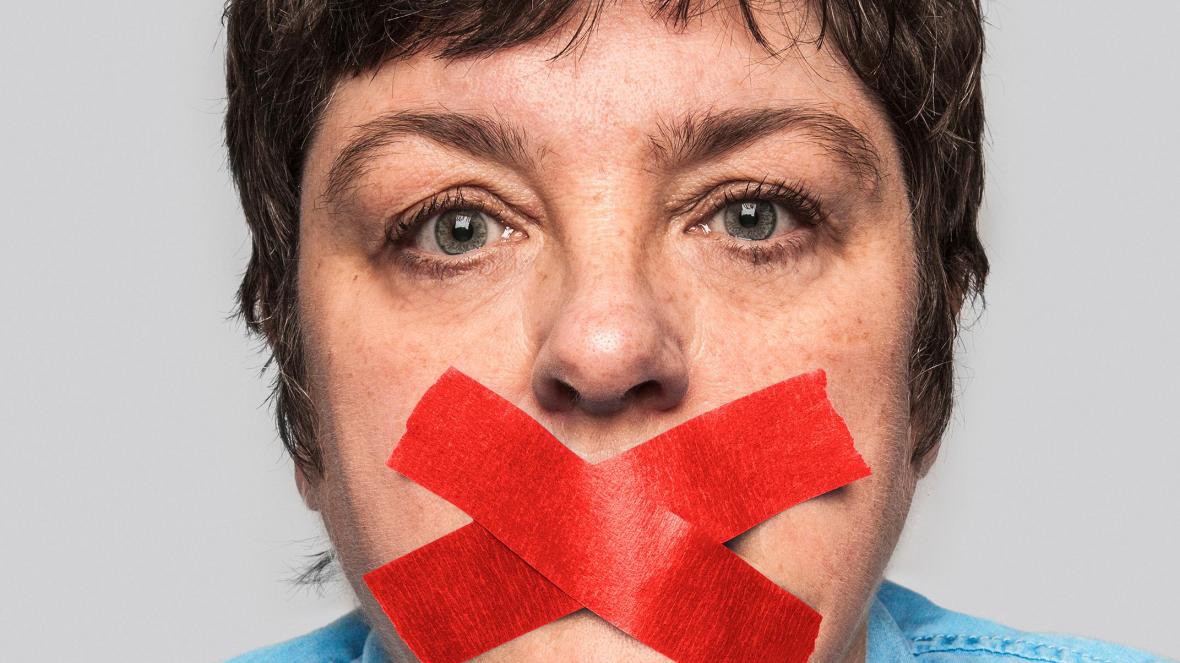
In a way I feel sorry for Julie Bindel. Her politics haven’t changed since the 1970s even though the world has and she’s scrambling around with photos of tape on her face wondering why her books aren’t on display prominently enough. She reminds me of Les Dennis or Jim Davidson, who can’t work out why they’re no longer invited on to television anymore even though their comedy hasn’t changed. It must be hard for Bindel to work out why many young feminists don’t engage with her anymore and instead of looking to her views, she blames men and the women who love them.
I did this blog for a few reasons. While dated and irrelevant, Bindel is too prominent in radical feminism to ignore. Views such as the ones she holds on transgender rights, the sex industry and gendered violence are barriers to equal rights for those actually affected by these issues. It is easy to write her off, but it’s only by engaging with her and breaking open her flawed logic that we can see her for what she is: ignorant, bigoted and desperate to ‘win’, whatever that even means.
Huge thanks to M for their comments, suggestions, and brilliance with logic.